How to Prepare for Your First Brazilian Ji Jitsu Competition in Tempe, AZ
Key Takeaways:
- Start BJJ competition prep 6–8 weeks out by increasing mat time, sharpening 2–3 high-percentage techniques, and studying the ruleset for your division.
- Mental preparation and weight management matter just as much as physical drilling — competition day rewards athletes who arrive calm, fueled, and ready.
- Talk to your ACS coaches now about the upcoming competition prep schedule so you can compete with a real game plan behind you.
How do you prepare for your first BJJ competition? Start 6–8 weeks out by increasing your mat time, drilling two or three high-percentage techniques until they become automatic, and learning the rules set for your specific division. Add light weight management in the final two weeks, practice visualization, and arrive on competition day with your gear packed, your bracket understood, and your nerves accepted as fuel rather than fear.
That answer fits on a napkin. The execution, however, deserves a fuller map — especially if you’ve been training out of Tempe, Chandler, Mesa, or Gilbert and you’re staring at a local tournament registration form, wondering whether you’re ready.
You are. Here’s how to get there.
Ramping Up Your Training: 6–8 Weeks Out
The single most common mistake first-time competitors make is changing nothing about their training until the week before the event. Six to eight weeks of intentional preparation dramatically change the outcome.
During this window, aim to increase your mat sessions from two or three times per week to four or five. That doesn’t mean grinding harder every session — it means more exposure. More repetitions. More problem-solving under mild pressure. A good weekly split during the prep phase looks something like this:
- Two technique-focused drilling sessions (no ego, high reps)
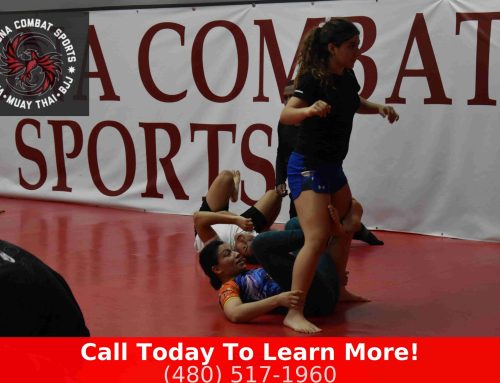
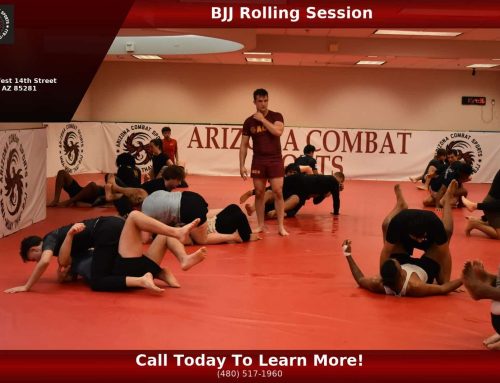
- Two live rolling sessions with resisting partners
- One open mat or situational sparring session (start from positions you’re weak in)
The drilling-to-rolling ratio matters more than most students realize. Drilling builds the motor pattern; rolling tests whether that pattern holds under stress. Lean toward drilling early in the prep cycle and shift toward more live rounds in the final two weeks.
Technique Selection: Go Deep, Not Wide
If you’ve been training for six months or more, you already have a handful of techniques that work for your body type and style. Your job now is to cut the list down, not add to it.
Pick two or three high-percentage positions you can chain together into a coherent game. A simple example: strong guard retention that funnels into a sweep, which puts you in top position, where you pass to side control and look for a submission from there. That’s a narrative your body can follow under adrenaline.
Drilling a scissor sweep ten thousand times is not boring — it’s competitive insurance. When the nerves hit on tournament day, and your fine motor skills temporarily abandon you, your gross motor memory will carry you through. High-percentage techniques survive that transition. Flashy low-percentage attacks do not.
Talk to your coaches about which positions from your current game translate best to competition. They’ve watched you roll. They know what works for you before you do.
Understanding the Rule Set and Bracket Format
Local tournaments in Arizona typically run under one of two formats: IBJJF-style rules (points, advantages, no heel hooks at most beginner levels) or submission-only formats with or without overtime. Knowing which you’re entering before you step on the mat is non-negotiable.
Under points-based rules, a takedown scores two points, a sweep scores two, passing the guard scores three, and a mount or back take scores four. Advantages are awarded for near-submissions and near-scoring positions. Knowing this changes your strategy — if you’re down on points with ninety seconds left, you need to understand which action earns an advantage and which earns nothing.
Submission-only tournaments simplify the math: finish or go to overtime. Some use EBI overtime rules, some use coin flips to assign position. Read the tournament’s specific rulebook.
On bracket format: most local events use a single-elimination or round-robin structure for smaller divisions. If your division has fewer than four competitors, you may end up in a combined bracket or receive a medal with fewer matches than expected. None of that diminishes your experience. Every match is a data point.
Weight Management in the Final Two Weeks
Unless your coach specifically recommends cutting weight, the smartest move for your first competition is to walk on at a weight you can comfortably hold. Extreme water cuts at the white or blue belt level are unnecessary and physically punishing for what amounts to a learning experience.
That said, being mindful of your nutrition in the two weeks leading up to the event is worthwhile. Reduce processed foods and excess sodium, stay well hydrated, keep your energy consistent, and avoid any new dietary experiments close to the event. Your body needs to feel normal on competition day — not depleted.
If your weight is hovering right at a division cutoff, talk to your coaches. They’ll give you an honest assessment of whether a small, sensible adjustment makes sense, or whether you’re better served by competing at a higher weight while feeling strong.
Mental Preparation and Visualization
This is the part most first-timers skip entirely, and it shows.
In the weeks before your tournament, spend five to ten minutes per day visualizing your match. See yourself warming up, stepping onto the mat, gripping up, executing your A-game. Visualize both winning scenarios and recovery scenarios — what do you do if you get taken down? What’s your response if someone passes your guard? Your brain doesn’t fully distinguish between a vivid mental rehearsal and a physical repetition. Use that.
On competition day, nerves are guaranteed. They’re not a sign that something is wrong — they’re your body preparing to perform. The athletes who manage nerves best are the ones who’ve accepted them in advance rather than being surprised by them in the moment. Take a breath. Shake out your hands. Trust your drilling.
Day-Of Logistics: What to Bring and What to Expect
Pack your bag the night before. Include:
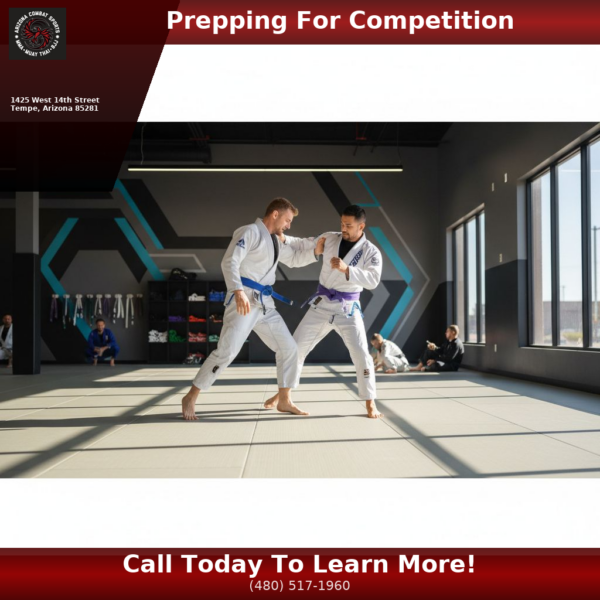
- Your Gi (clean, properly sized) and a backup rashguard if competing no-gi
- Mouthguard
- Water bottle and electrolyte drink
- Light snacks — bananas, rice cakes, or a sandwich work well between matches
- Your tournament registration confirmation and ID
- Flip-flops for walking between mats
Arrive early enough to warm up properly. Most venues open their warm-up area 30–60 minutes before the first match of the day. Find your bracket on the board, note your division’s mat number, and stay close when your division is called. Tournaments run on bracket flow, not a fixed clock — your match could be called earlier than you expect.
Your coach or a teammate will corner you. Listen to their cues between rounds, but keep your focus internal during the match. Brief, concrete reminders — “pass to side control,” “stay tight on the grip” — are what corners are for.
Post-Competition Recovery and Reflection
Win or lose, give your body 48 hours of genuine recovery after the event. Rehydrate, eat real food, sleep. Don’t roll hard the day after a tournament.
More importantly, reflect before the adrenaline fades. What worked? What got exposed? Write it down. Competitors who debrief honestly improve faster than those who only celebrate wins or catastrophize losses. Every match — even a ten-second submission — contains coaching information.
At Arizona Combat Sports, the coaches have seen this cycle hundreds of times. Students who compete regularly progress faster than those who don’t — and 2026 is a great year to start that habit. There’s a reason the culture here carries the tagline “One year here equals five years anywhere else.” Competition accelerates everything.
Ready to compete?
Talk to the coaches at Arizona Combat Sports about the upcoming competition prep schedule. They’ll help you pick the right tournament, build your game plan, and make sure your first step onto a competition mat feels earned.
Frequently Asked Questions About BJJ Competition Prep in Arizona
Sources
- IBJJF General Competition Rules — International Brazilian Jiu-Jitsu Federation — https://ibjjf.com/rules
- Motor learning and sports performance: repetition and skill acquisition — National Institutes of Health / PubMed — https://pubmed.ncbi.nlm.nih.gov/
- Visualization and mental imagery in sport performance — American Psychological Association — https://www.apa.org/topics/sport-exercise/imagery
25+ Years in Tempe
Why Trust AZ Combat Sports
For more than 25 years, Arizona Combat Sports has trained complete beginners, kids, ASU students, first responders and professional fighters at one location: 1425 West 14th Street in Tempe. Here's what has kept the East Valley coming back.
-
Founded & Run by Fighters
Founded by Trevor Lally and led today by partners who have competed at a high level, including former pro fighter and MMA head coach Trevor Smith.
-
Black Belt Instruction
BJJ head coach Steve Rosenberg is a second-degree black belt under Nova União and has coached at ACS for more than 15 years.
-
Proven With Competitors
An active fight team of amateur and pro athletes, with students competing in IBJJF tournaments, submission-only events and MMA.
-
Safety First, Always
Every class is supervised, sparring is always optional, mats are sanitized multiple times a day, and youth instructors are background-checked.
-
Zero-Ego Culture
Beginners train next to experienced fighters in a team-first room. Most members walk in with no martial arts background at all.
-
No Contracts, No Surprises
Month-to-month memberships with no sign-up fees. Try one free class per discipline before you commit to anything.
"I've trained at this gym for four years doing BJJ and I can't recommend it enough."
Anthony, Google review of Arizona Combat Sports